Defense · Government · Commercial
Wingate Aerospace
Autonomous tilt-rotor VTOL for survey, sensing, and cargo.
Three motors and a carbon fiber airframe. It takes off and lands vertically, flies on its wing to cover ground, and is designed to fly complete missions on its own.
In development · West Grove, Pennsylvania
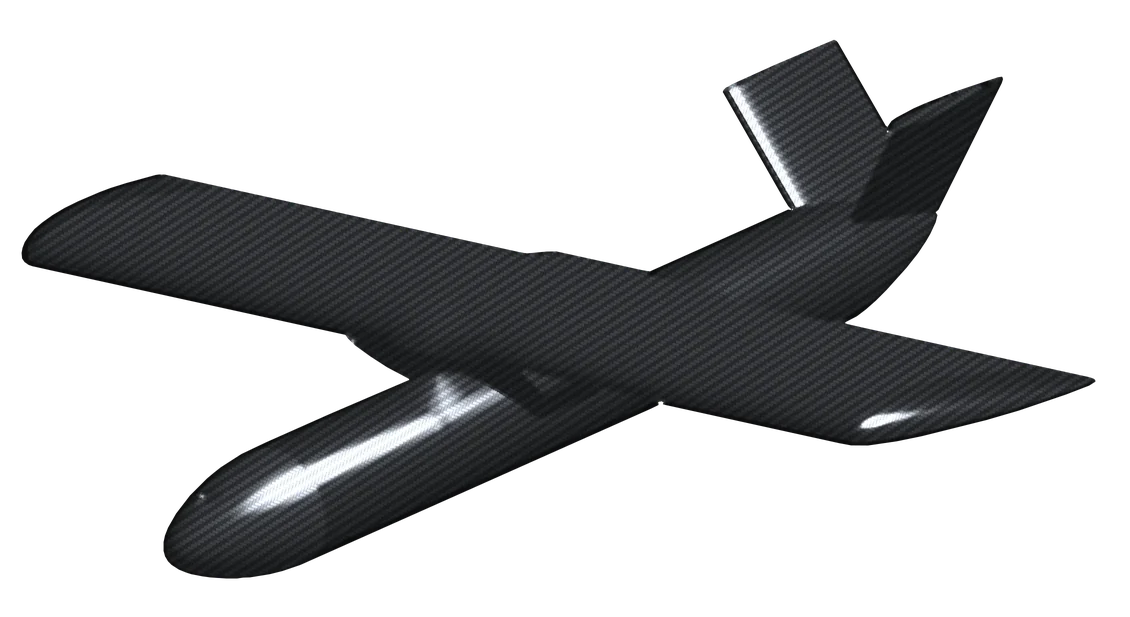
- Propulsion
- 3 motors
- Wingspan
- 32 in max
- Takeoff
- Vertical
- Flight
- Autonomous
- Airframe
- Carbon fiber
01Platform
Lifts like a drone. Flies like an airplane.
Three motors lift it straight up, so it needs no runway, launcher, or recovery net. Once it's moving, the rotors tilt forward and the wing carries the weight, which takes far less power than hovering.
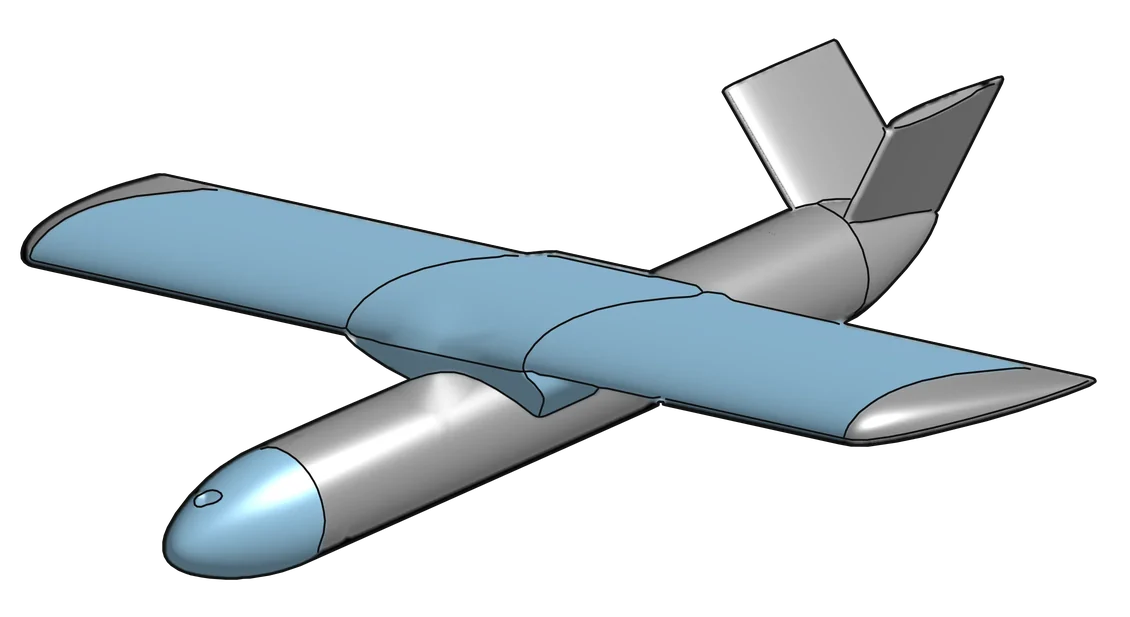
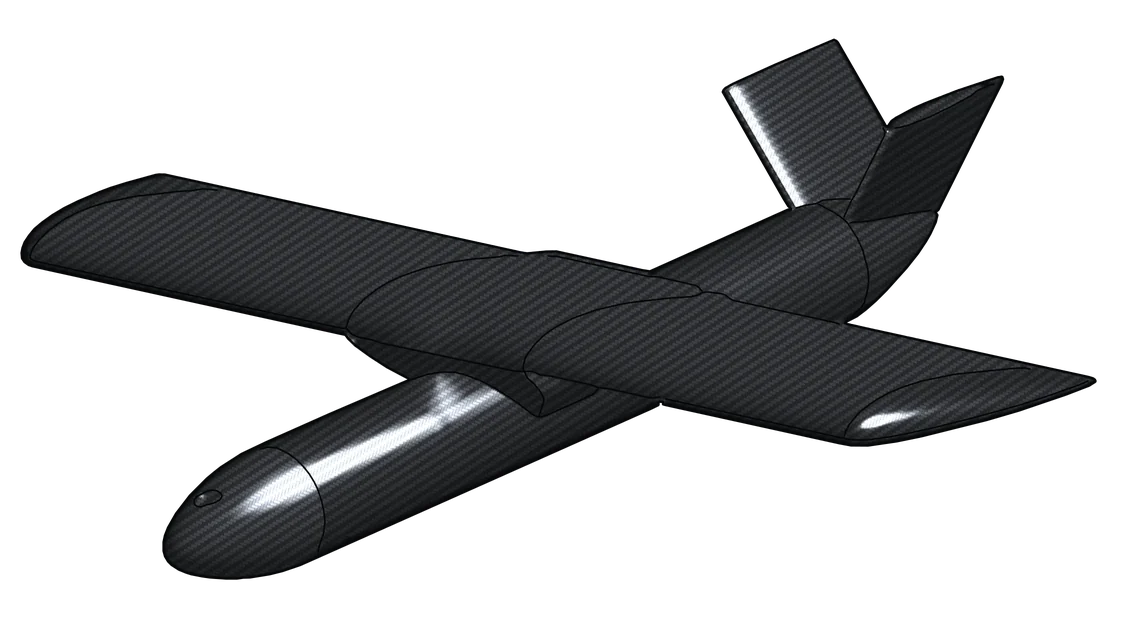
- Propulsion
Three motors
Vertical lift for takeoff and landing. In cruise, tilted rotors pull it forward while the wing carries the weight.
- Structure
Carbon fiber airframe
Stiff, strong, and light for its size, so more of the lift goes to the mission.
- Tail
V-tail
Two angled surfaces do the job of a standard three-piece tail.
- Size
32 in max wingspan
Compact enough to transport easily and fly from a tight space.
02Mission profile
Plan the route. It flies the mission.
Designed for fully autonomous flight, from vertical takeoff to vertical landing, with no one flying it by hand.
-
Vertical takeoff
Lifts straight up from a small clear area. No runway or launcher.
-
Transition
The rotors tilt forward as it picks up speed, and the wing takes over the lift.
-
Cruise
Flies the planned route on its wing while onboard sensors and cameras collect data.
-
Transition
Near the landing site, the rotors tilt back up as it slows to a hover.
-
Vertical landing
Sets down on the spot, ready for the next mission.
03Applications
Built for survey, sensing, and supply.
One aircraft, set up with the sensors or cameras the job calls for. These are the missions it's being designed around.
-
Commercial and civil
Survey and mapping
Flies on its wing to cover large areas, collecting aerial imagery and survey data for mapping, construction, and farming.
-
Defense and public safety
Surveillance and reconnaissance
Small cameras and sensors put eyes on an area before people go in: perimeter security, search, and situational awareness.
-
Infrastructure and energy
Inspection and monitoring
Follows power lines, pipelines, rail lines, and other long routes on a set path and brings back the data.
-
Planned Logistics
Cargo and resupply
A future version will carry cargo and swap it automatically, trading one load for the next without anyone handling it.
04Payloads and autonomy
Carry what the mission needs.
Sensors ride inside the fuselage and small cameras mount on the airframe. Autonomy handles the flying, so the team on the ground can focus on the data.
- Sensors
- Mission sensors fit inside the fuselage.
- Cameras
- Small cameras mount on the airframe for photos and video.
- Autonomy
- Designed to fly takeoff, transition, route, and landing on its own.
- Cargo Planned
- Auto-swap cargo in a future version, for hands-off resupply.
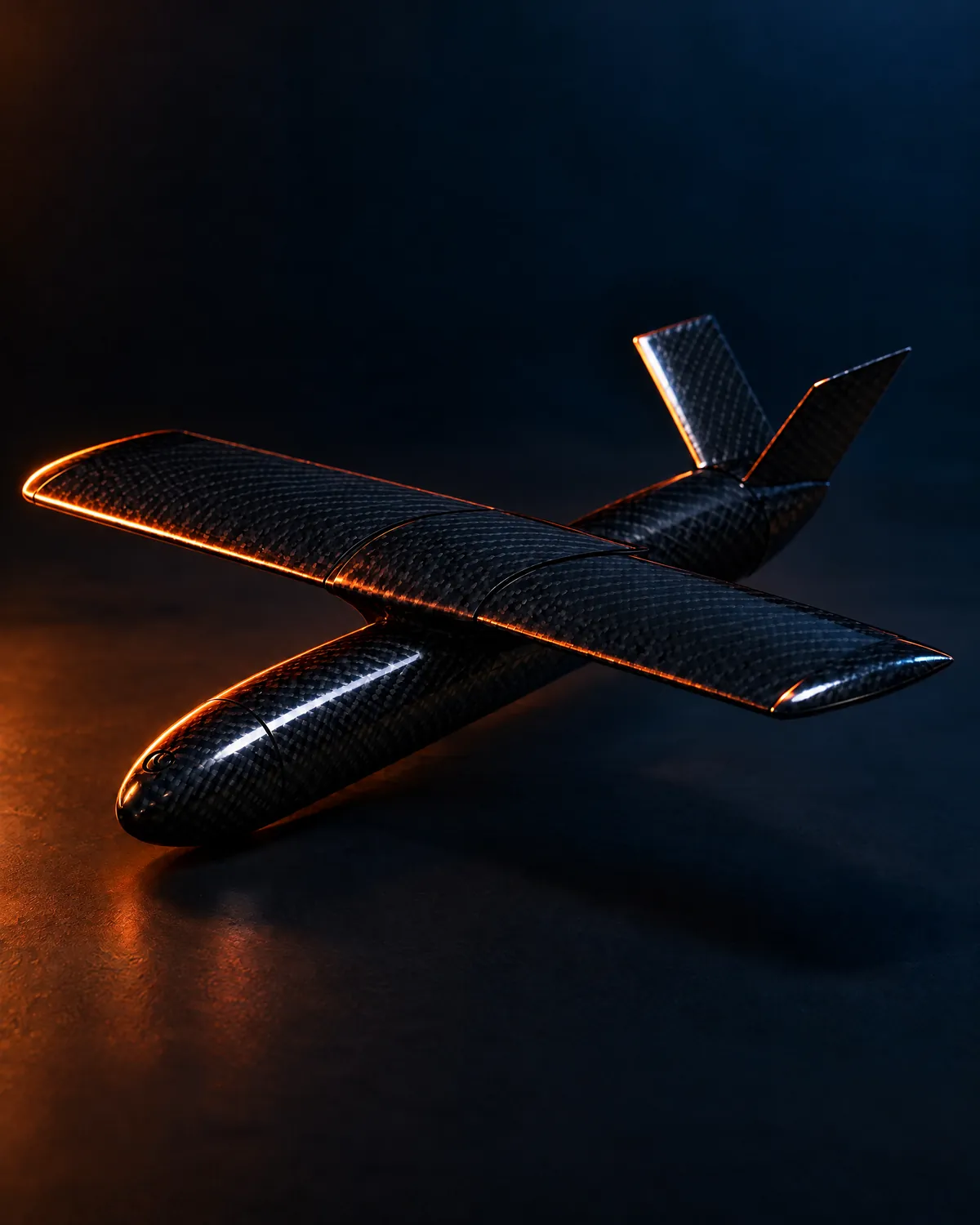 Concept render
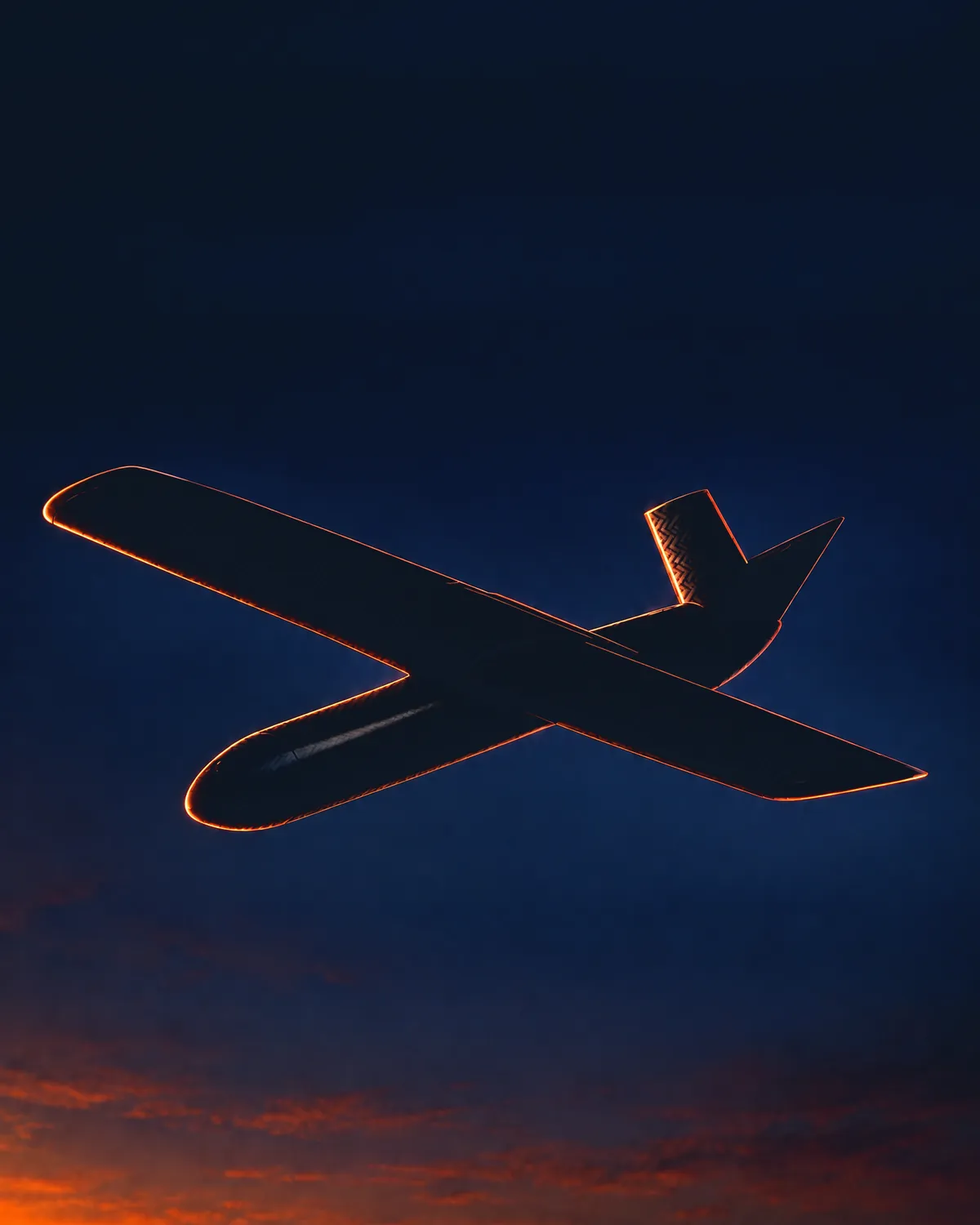 Concept render
05Specifications
Preliminary specifications
What's set today, and what will be confirmed in flight testing.
- Configuration
- Tilt-rotor VTOLThree motors. Takes off and lands vertically, cruises on its wing.
- Wingspan
- 32 in max
- Airframe
- Carbon fiber
- Tail
- V-tail
- Flight control
- Fully autonomousTakeoff to landing on a planned route.
- Payloads
- Sensors and small cameras
- Cargo
- Auto-swap cargoPlanned for a future version.
- Runway needed
- None
- Weight
- To be announced
- Endurance
- To be announced
- Payload capacity
- To be announced
- Price
- To be announced
Figures are design goals and may change during testing.
Program status
- Complete
Concept
Configuration set: three-motor tilt-rotor VTOL, V-tail, and a wingspan of 32 inches or less.
- In progress
CAD design
The airframe is modeled in Onshape and being refined.
- Next
Carbon fiber prototype
The first airframe, built in carbon fiber.
- Planned
Flight testing
Hover tests first, then transitions and autonomous flights.
- Planned
Availability
Units offered for sale. Teams that request information hear first.
- Future
Auto-swap cargo
A cargo version that swaps loads automatically.
06Questions
Common questions
More detail will be shared as testing moves along.
When will it be available?
It's in development now. Teams that request information will hear first about test flights, early access, and when orders open.
How much will it cost?
Pricing will be set closer to production. Request information and we'll share it with you first.
What can it carry?
Mission sensors inside the fuselage and small cameras on the airframe. Payload weight will be published after flight testing. A cargo version with auto-swap cargo is planned.
Does it need a runway or launcher?
No. It takes off and lands vertically and flies on its wing in between, so a small clear area is enough.
How autonomous is it?
It's designed to fly complete missions on its own: takeoff, transition, the planned route, and landing. The operator plans the mission and keeps watch.
Can it be set up for our mission?
Tell us what you need to carry, how far, and where. Payload options are being shaped now, and input from operators helps set them.
Who is behind Wingate Aerospace?
Wingate Aerospace is part of Wingate Works, based in West Grove, Pennsylvania. Wingate Works also provides CAD modeling and drawings for other companies' projects. See CAD services.
07Contact
Talk to us about your mission.
For defense, government, and commercial teams. Tell us what you need to fly, and we'll follow up as the program moves forward.
- Or email [email protected]
- West Grove, Pennsylvania, USA